Engineering · III
The Aqueducts
Eleven major aqueducts delivered an estimated one million m³ of fresh water per day to the city of Rome — a per-capita supply not matched until the 20th century.
Origin
Inherited & scaledThe concept is older: Assyrian engineers built the Jerwan aqueduct c. 691 BC, and Greek city-states used qanat-style tunnels. The Romans inherited the ideaand combined it with concrete, arches and gravity surveying to push it to continental scale.
How it worked
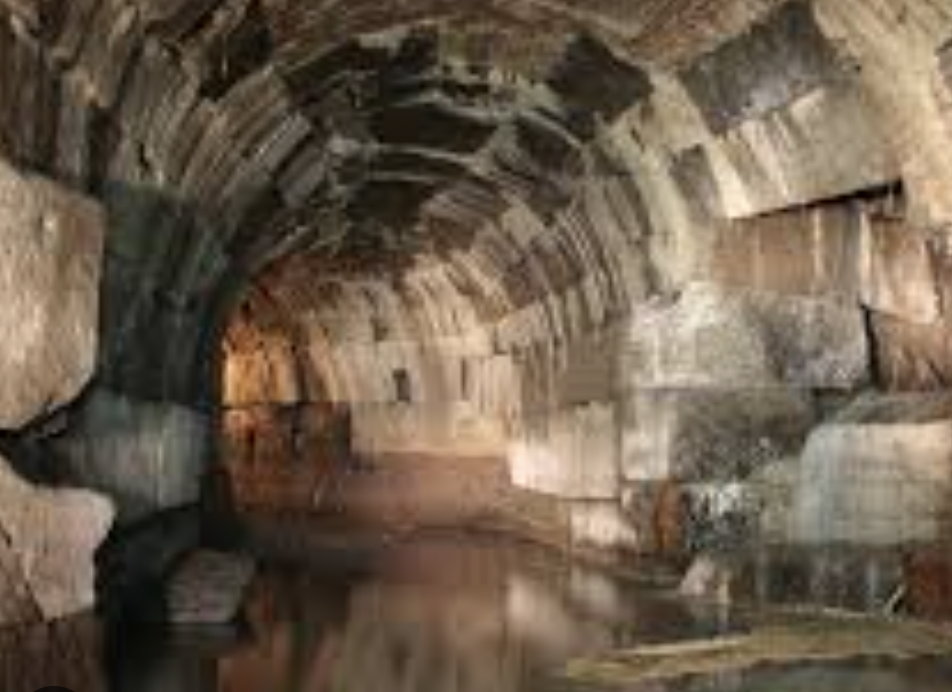
A gentle, constant downhill gradient (often less than 1:5,000) from a mountain source — siphons in inverted lead pipes for valleys, arcades for shallow dips, tunnels through hills. Distribution at castella aquarum fed baths, fountains and finally private homes.
Still with us
YesThe Aqua Virgo (19 BC) still feeds the Trevi Fountain. Modern gravity-fed municipal water in places like New York City uses identical first principles — long tunnels, surge tanks, distribution reservoirs.
By the numbers
Aqueducts serving Rome11
Total length (Rome)≈ 500 km
Daily flow into Rome≈ 1 M m³
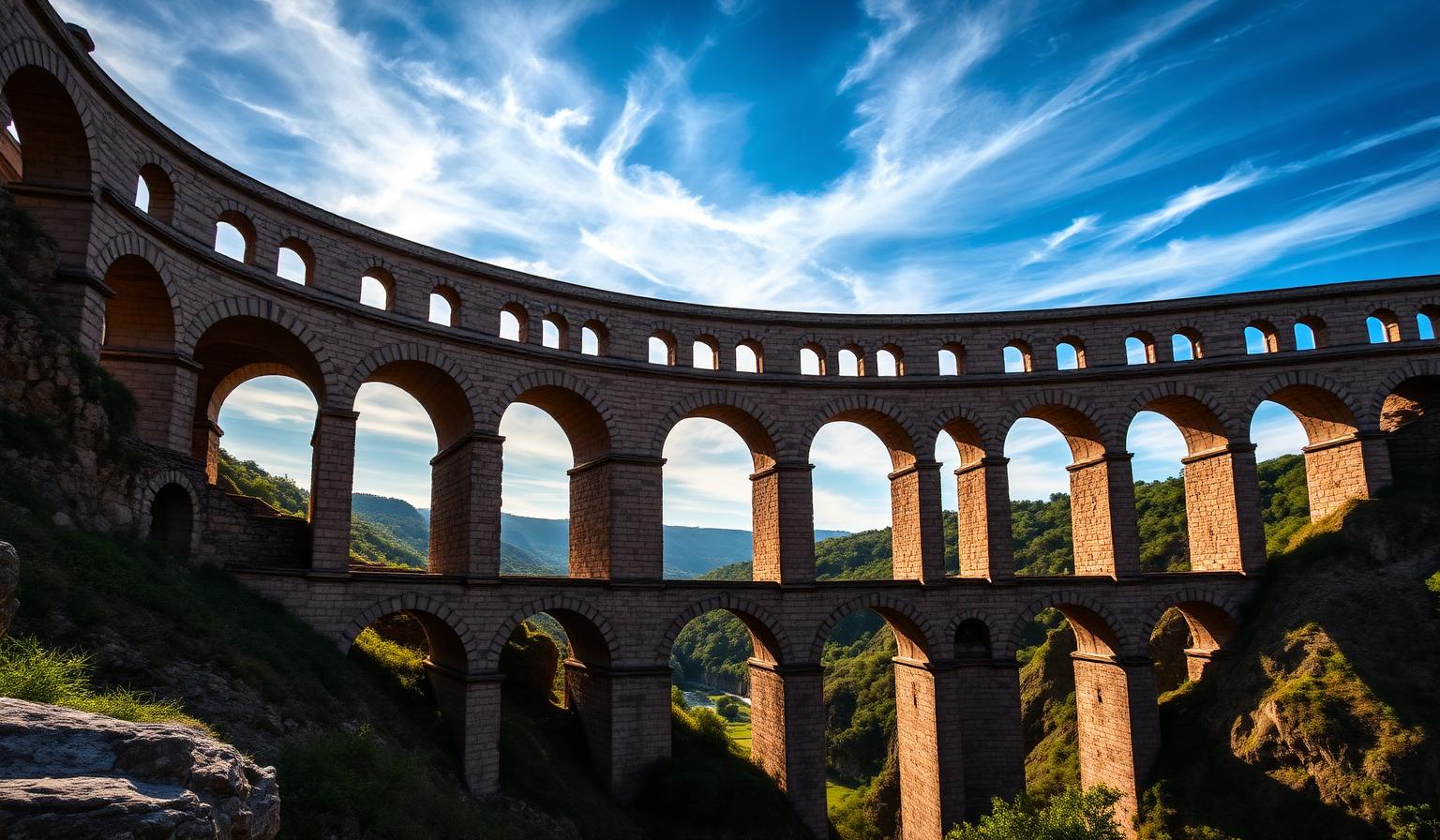
Highest arcade≈ 49 m (Pont du Gard)
Source → city
- 1 · Spring capture
- 2 · Settling basins (piscinae limariae)
- 3 · Channels, tunnels, arcades
- 4 · Castellum aquae distribution
- 5 · Baths · fountains · homes
The siphon trick
Where a valley was too deep to bridge, water dropped through sealed lead pipes, crossed the floor, and rose back up to ~95% of source height by pressure alone. Lyon's nine siphons crossed 123 m of head.
Origin attribution
Roman synthesis · 45%Assyrian / Urartian · 30%Greek / Hellenistic · 25%
© 2026 Ryan Jensen. All rights reserved.