Engineering · V
The Arch, the Vault & the Dome
Three forms that channelled gravity into compression — letting Romans build bigger, lighter, and faster than anyone before them.
The Arch
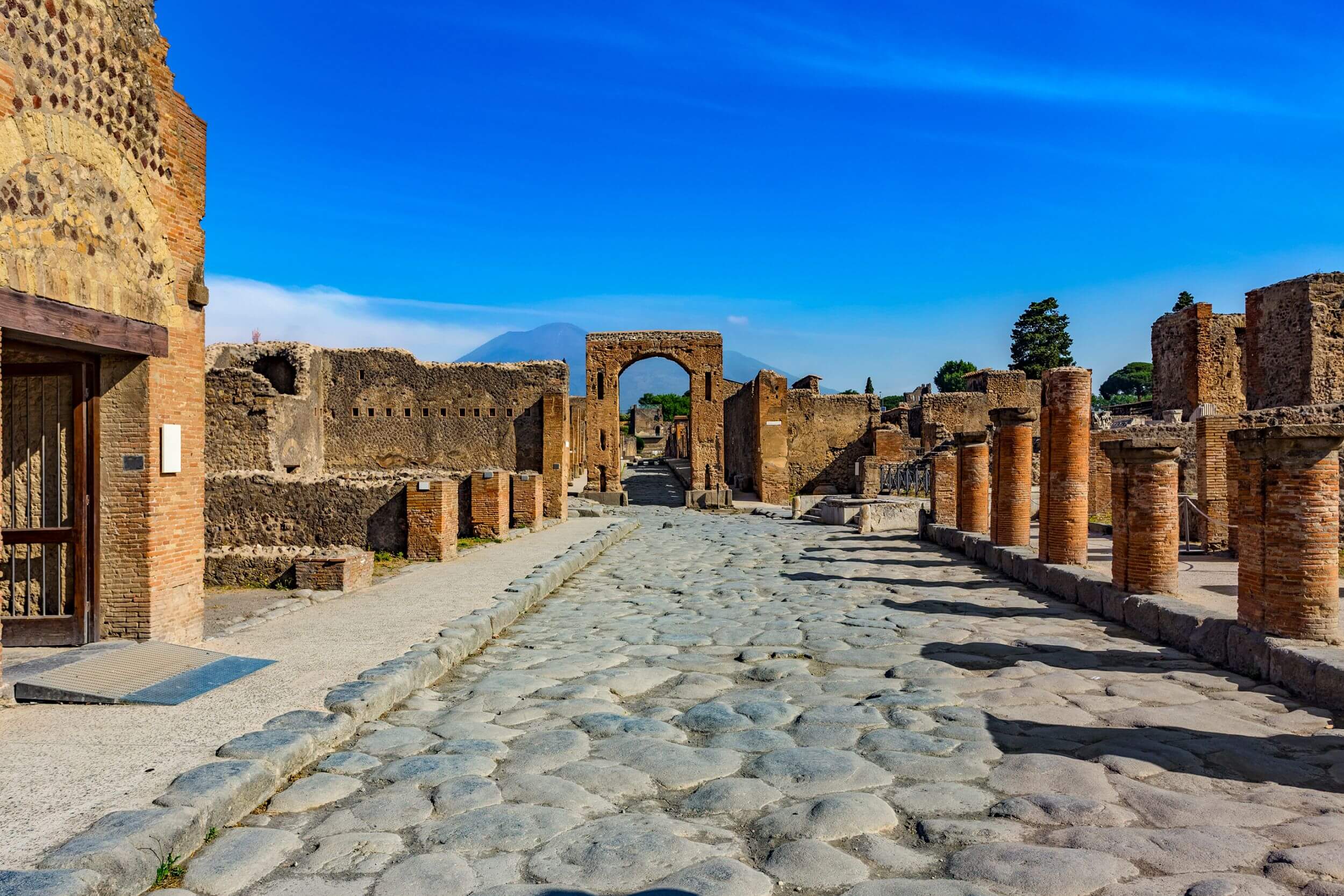
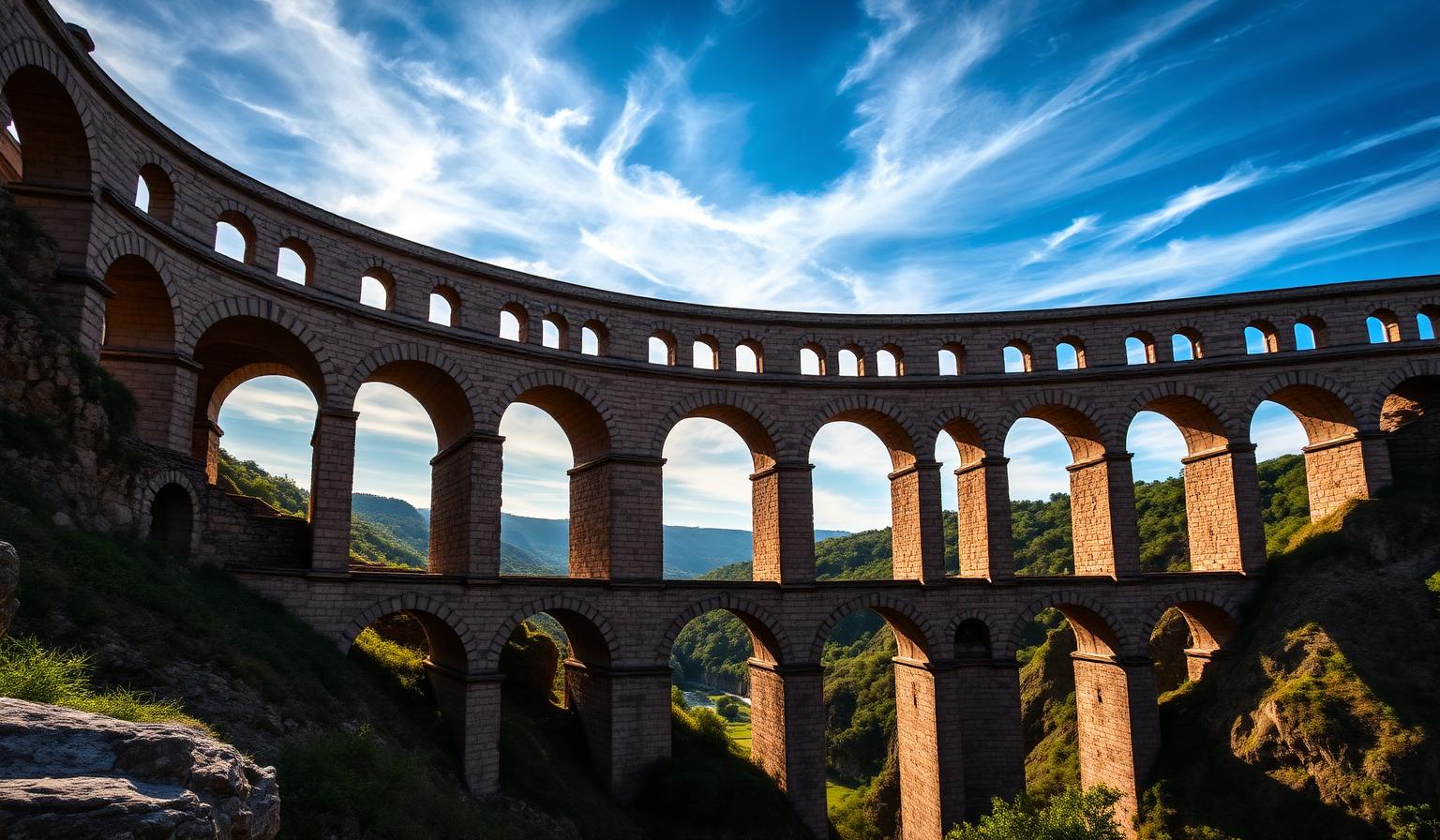
InheritedTrue voussoir arches existed in Mesopotamia by c. 2,000 BC and in Etruscan tombs. Romans standardised the semicircular arch and used it everywhere: bridges, gates, aqueducts, triumphal monuments. Their innovation was repetition at scale.
The Vault
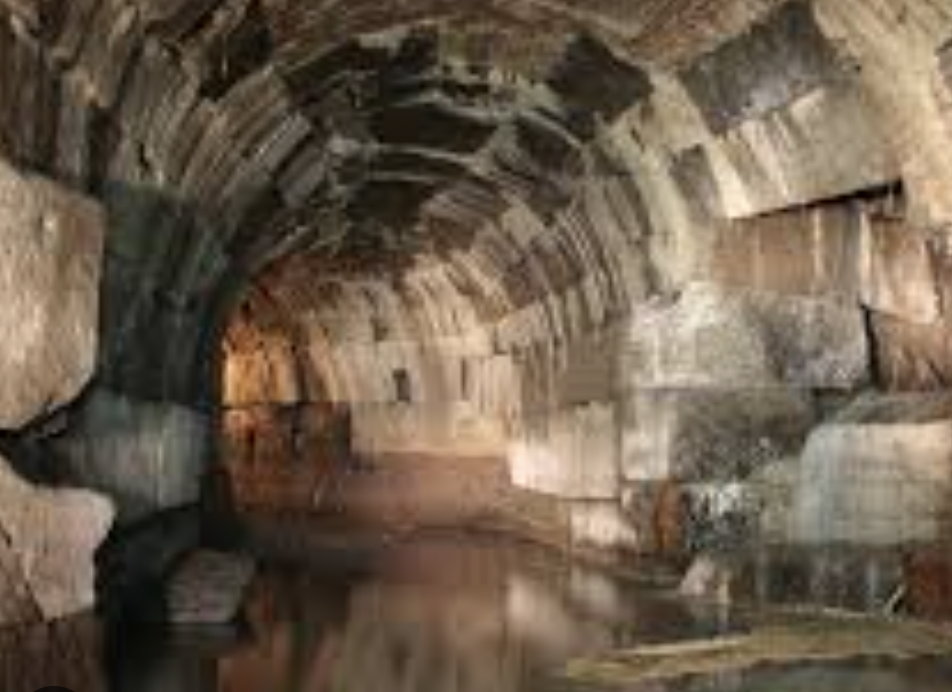
Roman-perfectedBarrel vaults, groin vaults (two barrels intersecting) and coffered vaults let the Romans roof huge interiors without columns — the Basilica of Maxentius cleared a 25 m span. The groin vault is essentially a Roman invention at this scale.
The Dome
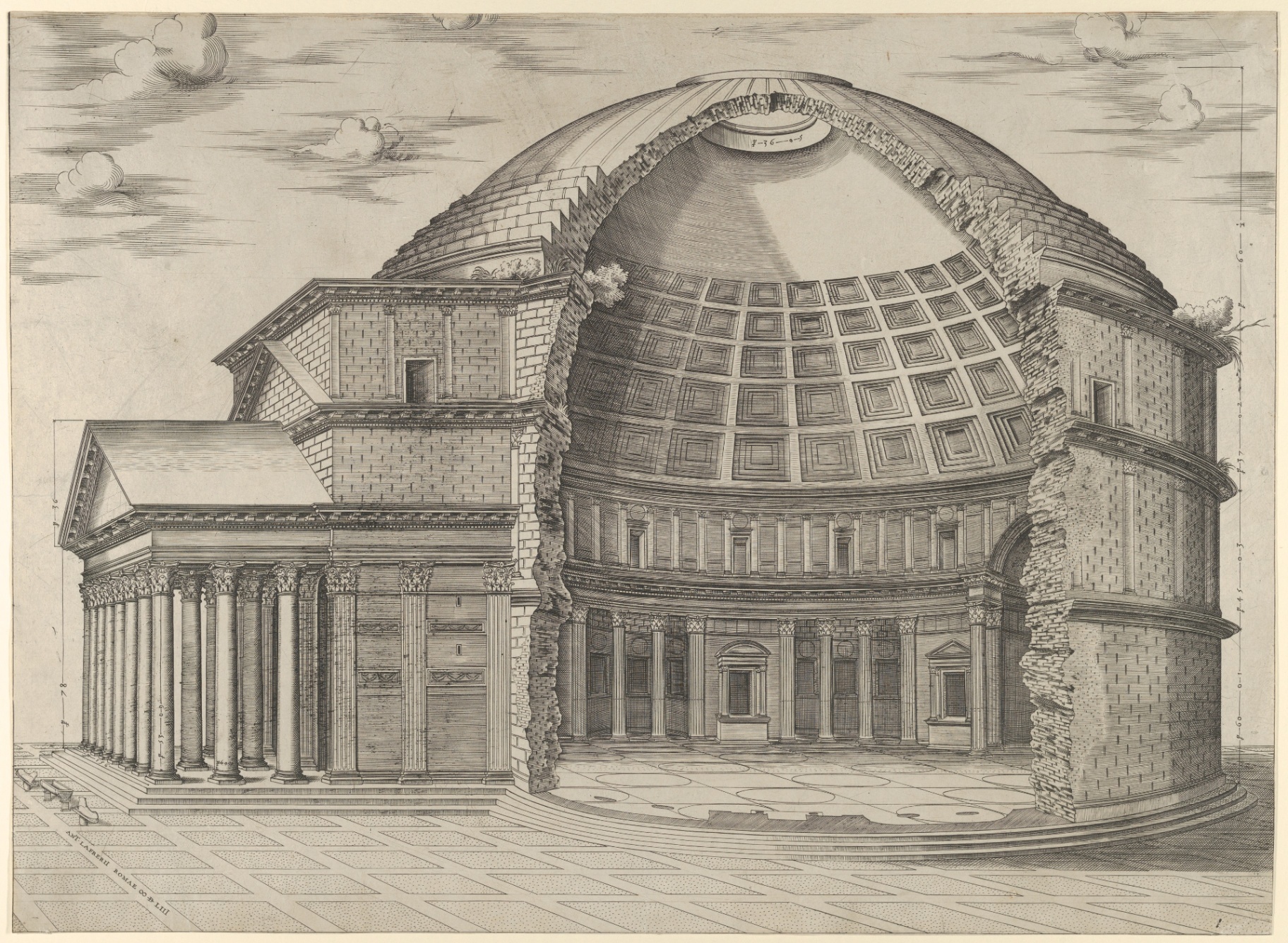
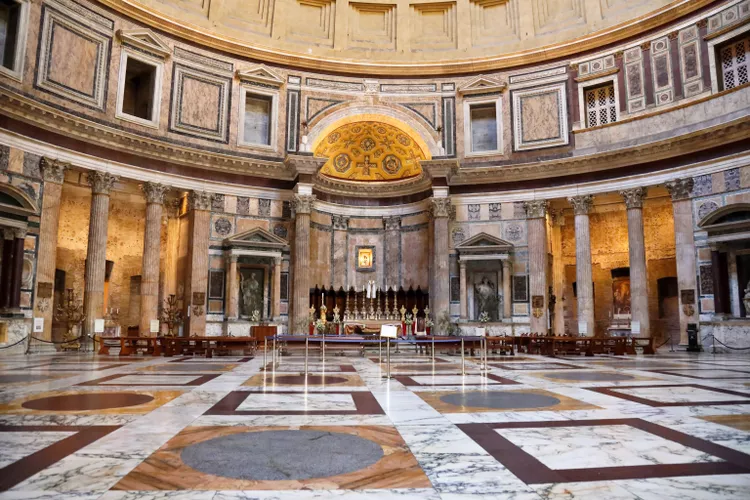
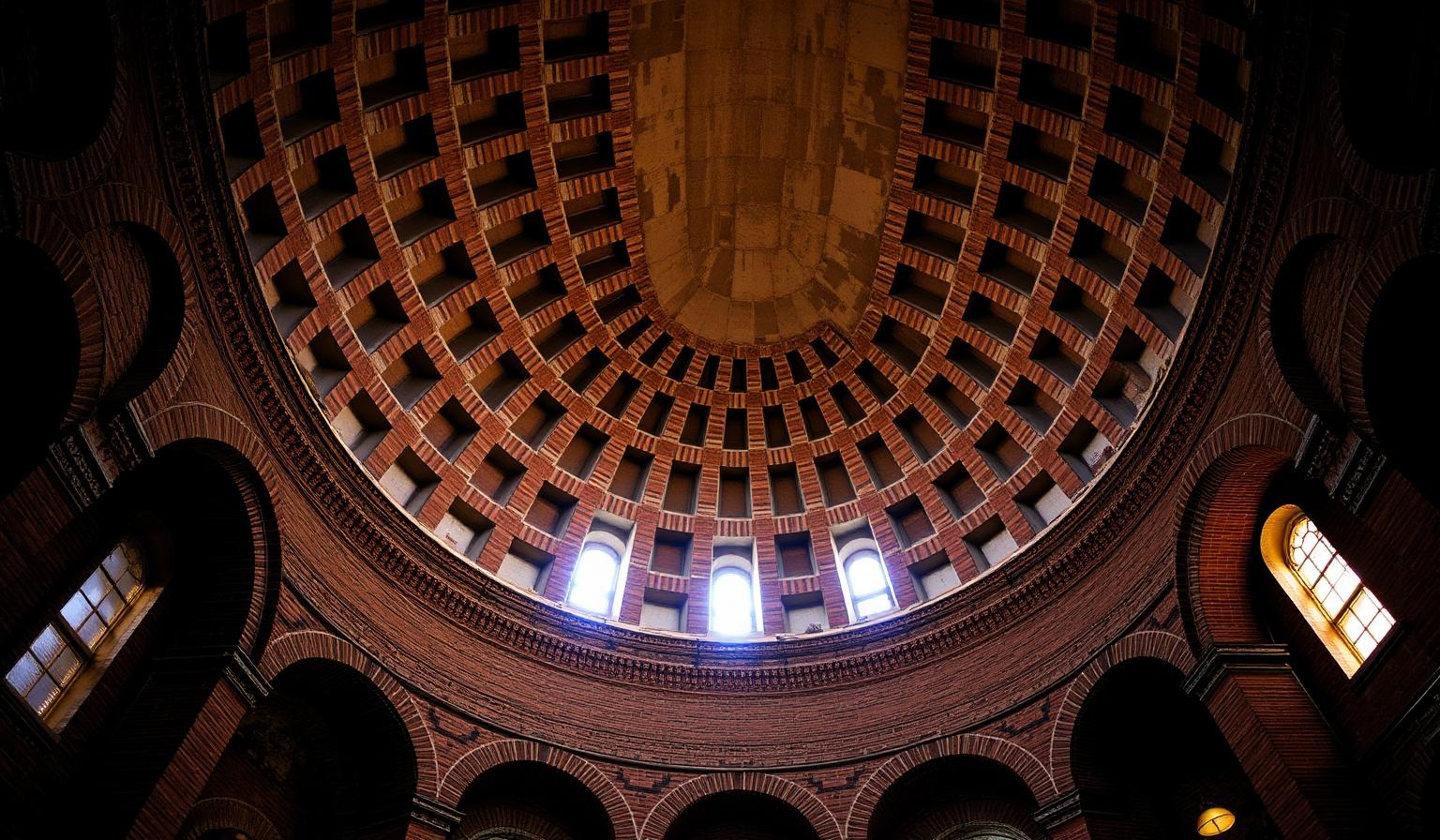
RomanEarlier cultures built corbelled domes (Mycenae). The first true hemispherical concrete domes are Roman — the Pantheon's 43 m clear span held the record for unreinforced concrete until today. No one has beaten it.
Why it mattered economically
Arches and vaults let Rome roof markets, baths, basilicas and warehouses without forests of columns. Larger clear spans meant more economically productive interior space — the ancient equivalent of the steel-frame office tower.
Modern echo
Every masonry bridge built before the steel age — and every concrete vault from Brunelleschi's dome (1436) to the Sydney Opera House shells — descends from Roman practice. Brunelleschi explicitly went to Rome to reverse-engineer the Pantheon.
© 2026 Ryan Jensen. All rights reserved.