Spotlight
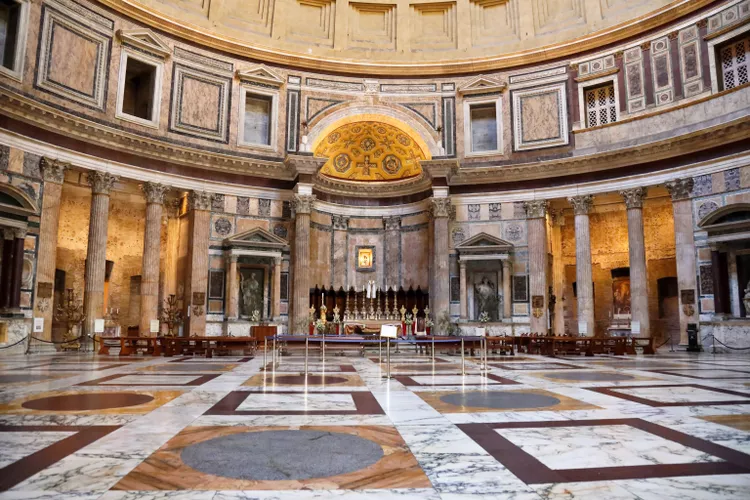
The Pantheon
Click any part of the building to explore the engineering and history of the best-preserved monument of ancient Rome.
Oculus
The eye to the heavens
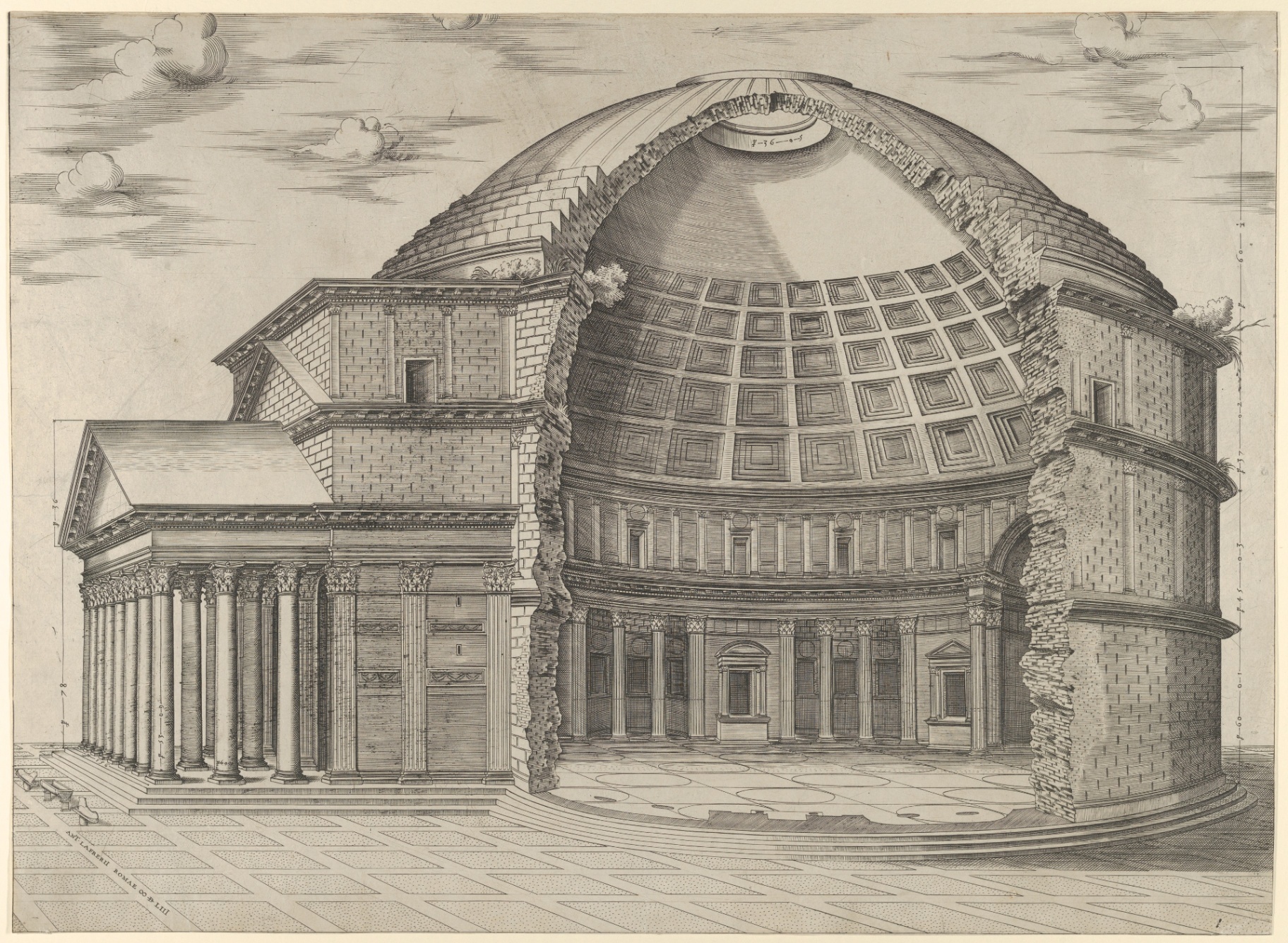
A 9 m circular opening at the dome's apex. The only natural light source; rain falls through and drains via 22 small holes in the sloped marble floor. The compressive ring around it locks the dome in place.
126 AD
Hadrianic rebuild
43.3 m
Dome diameter = height
1,900 yr
Still standing
History in three acts
- 27 BC — Marcus Agrippa builds the first Pantheon as part of his Campus Martius works. Rectangular plan, traditional temple.
- 80 AD & 110 AD — destroyed twice by fire.
- c. 118–128 AD — rebuilt under Hadrian in its present form; inscription kept Agrippa's name out of modesty (or politics).
- 609 AD — consecrated as the church of Santa Maria ad Martyres, saving it from spoliation.
- 1436 — Brunelleschi studies it before completing Florence's dome.
- Today — still the world's largest unreinforced concrete dome.
Why it still stands
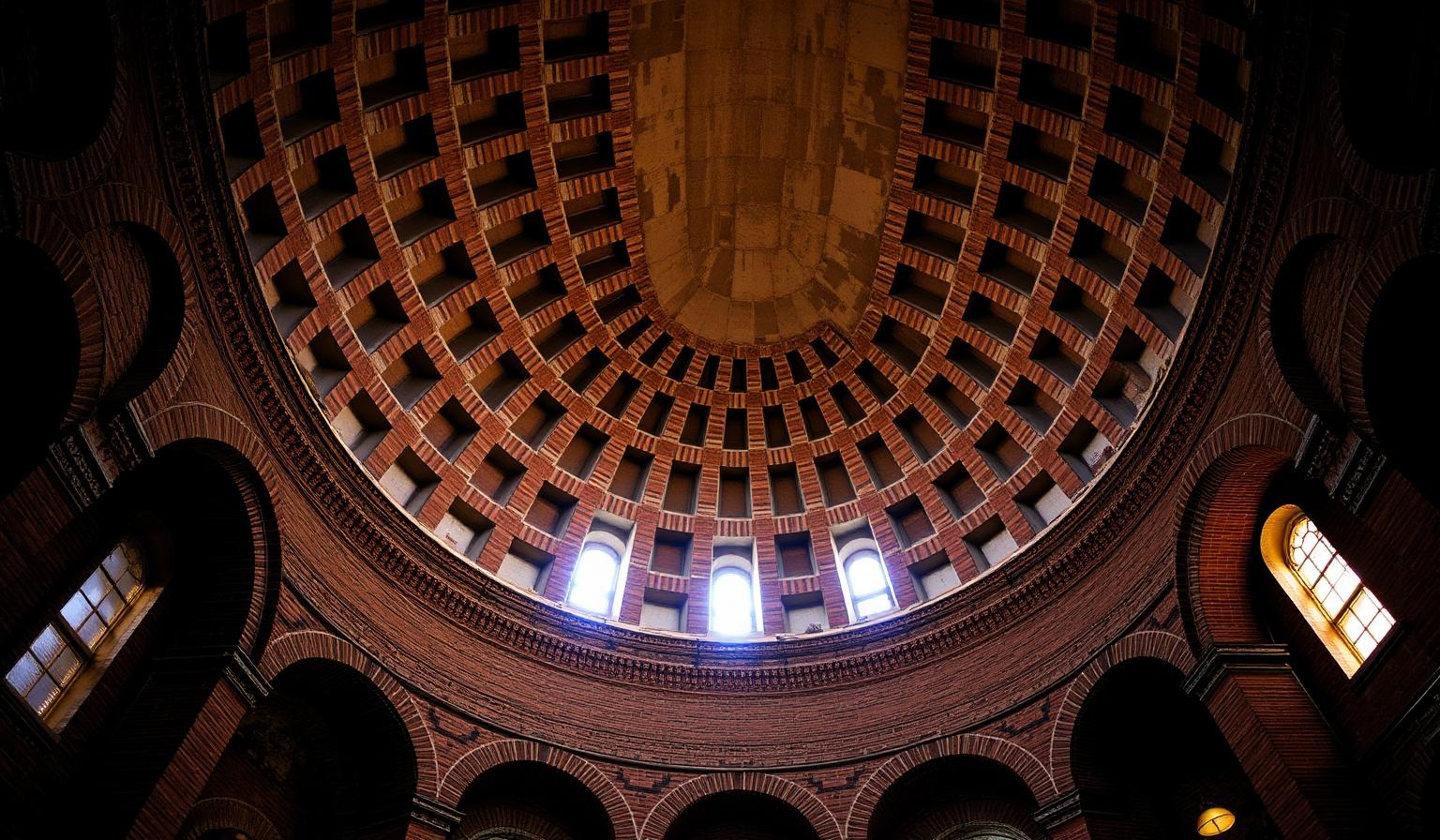
Three structural ideas working together: (1) varying concrete density — heavy travertine aggregate at the base, pumice at the top — drops the dome's mass by ~30%; (2) coffering removes more mass without weakening the shell; (3) the oculus and stepped extrados form a compressive ring that locks the dome closed instead of pushing it open. No rebar, no steel, no patching — just geometry and self-healing lime.
© 2026 Ryan Jensen. All rights reserved.